
Active vs Passive Flies
Incentives for tying and fishing soft hackles: exploring how to activate your nymphing
December 2025
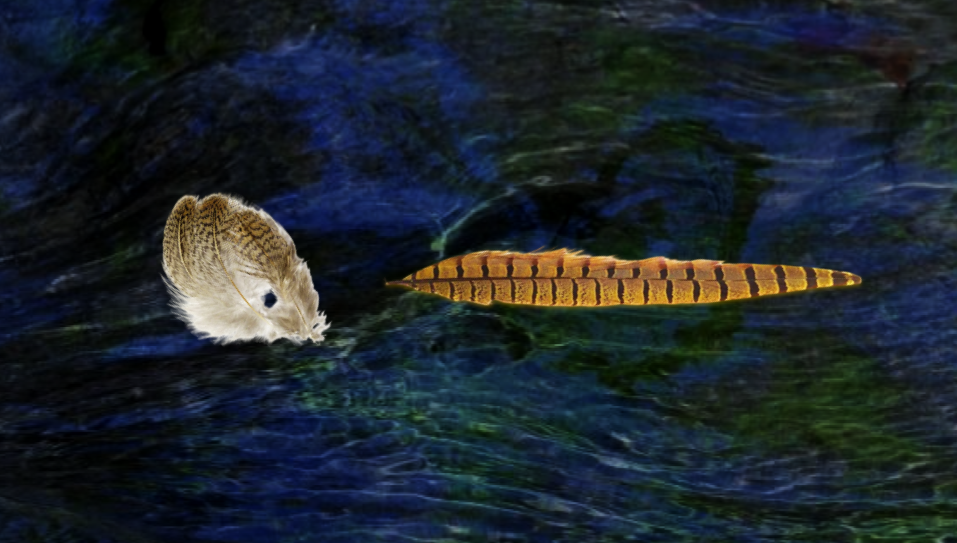
When Patagonia's Pheasant Tail Simplicity hit the shelves, I couldn't help myself. From a tyer’s perspective Chouinard, Mathews, and Mazzo's book may appear overly simple, but name recognition enticed me to investigate. Plus, I had a few extra pheasant tails laying around.
There’s more here than meets the eye.

What struck me first was the little things, snippets that piqued my interest. Mentions of bonefish success with soft hackled pheasant tails, and hooking Atlantic salmon on trout sized offerings. It's funny how a book about pheasant tails really spoke more to me about soft hackles. If you haven't checked it out, it's an affordable book you can conquer in an afternoon, with incredible editorial design and photography. Definitely coffee table material.

Under the surface of the book's main tying objective, Chouinard outlines his preference for simple soft hackles, usually pheasant tail and partridge. It hints at something often overlooked by most trout-centric tiers: passive vs active traits in flies.
You can hear him talk about it in his own words
Most trout flies are passive, you cast the indicator rig, dead-drift, mend and let the fish do the rest. Especially nymphs, even the illustrious pheasant tail is a passive offering. A fish laying in wait finds the fly unassumingly drifting downstream. Maybe the fly tumbles in the current, but the fly design itself is static. (That's not to say it's not enticing to trout.) We're all banking on picking the right fly to look like something the fish has seen before, and counting on the fish to take the imposter. There's absolutely nothing wrong with this approach, it works! It's just a passive presentation.
Alternatively, you could wrap a soft hackle collar around the same pheasant tail. Even if you fish it the same, passively drifting it downstream, tumbling current pulses against the palmered soft hackle: the fly breathes. Maybe the pulsing looks like a caddis pupa emerging, maybe a stonefly wildly wiggling to steady itself, or a BWO dancing around as it tries to find new habitat downstream. Now imagine if you can dictate the twitching as the fly drifts downstream. Using modified euro-presentation, Chouinard controls the rising and falling soft hackle, accentuating the pulsing fibers, trying to induce a take. That's an active approach for soft hackles and flymphs.
This insight is where Pheasant Tail Simplicity really offers something, though the ideas aren't exactly new. Chouinard credits adapting Tenkara techniques into a rod+reel outfit that leans on actively presenting soft hackle flies for trout.
It sounds strange right? The dead drift method is the gold standard, why go against what usually works? Yet, in other realms of fly fishing, you'll frequently hear about feeding the fish, actively presenting flies elicit a take. Making a fly pulse, puff up sand, or kick like an injured baitfish - all to make the fish instinctively react. Forcing a response. That's the basis of the saltwater game, that's the Kelly Galloup streamer game. Rarely is the idea executed in trout nymphing.
It's not just for nymphing either. Mathew's offers similar tips on active presentation concepts for dry fly fishing in his section of the book, again highlighting the most interesting undercurrent to the book.
When you're limited by materials, restricted only to pheasant tail and partridge, you're forced to find new ways to feed trout, you may take an active approach, instead of waiting for a good drift to develop.
Enjoy this article? We need your help funding conservation and science reporting, fly fishing deep dives, and more stories from the road.
Every contribution helps support conservation and scientifically informed writing on fish.